
Environmental Health Mini Grant
UNI CEEE’s Environmental Health Program is offering mini grants of up to $5,000 per project. These mini grants are available to UNI faculty, staff, and students who engage in high-impact projects in coordination with CEEE staff that demonstrate the environment’s connection to public health, upstream solutions to downstream harms, and/or implementing the Precautionary Principle in community environmental health initiatives.
Grants can support student experiences in class or through a student organization, research or community projects, trips or travel, honoraria for invited guest speakers for a class or an on-campus event, or perhaps even help establish a new environmental health campaign led by UNI students (Like this one - Good Neighbor Iowa).
All funds must be spent by December 31, 2026. Grant recipients will have the opportunity to present their projects at the second annual statewide Environmental Health Student Symposium to be held during Fall 2026.
All Mini Grant Funds have been allocated for 2026.
If you are interested in applying for a Mini Grant in the future, please check back towards the end of this year when we will begin accepting applications again.
Mini Grant FAQs
- What is the purpose of the Environmental Health Mini Grant?
- The purpose of these mini grants is to create UNI student experiences in projects that highlight the connection of our environment and human health, develop projects that put environmental health sciences to work in the community, and support faculty's inclusion of hands-on exploration of environmental health topics in their courses.
- More information about our Environmental Health Programs.
- Who can apply?
- UNI faculty, staff, and students who engage in high-impact projects in coordination with CEEE staff that demonstrate the environment's connection to public health, upstream solutions to downstream harms, and/or implementing the Precautionary Principle in community environmental health initiatives.
- Where does funding come from and what is the amount?
- Grants are awarded by the UNI CEEE with generous support from the R.J. Carver Charitable Trust.
- Up to $5,000 per project
- How can I use this funding?
- Examples of what the grant can support:
- Student experiences in class or through a student organization
- Research grant or community projects
- Trips or travel
- Honoraria for invited guest speakers for a class or an on-campus event
- Perhaps even help establish a new environmental health campaign led by UNI students, like Good Neighbor Iowa
- Allocated funds may only be used for the purposes for which they were approved.
- Reimbursement for items purchased before the award was received will not be allowed.
- For the project, It is the responsibility of the individual or group to ensure that allocated funds are spent in accordance with the University of Northern Iowa and the Board of Regents policies, and any other policies the recipient is expected to comply with.
- Examples of what the grant can support:
- What are some examples of topics that can be explored?
- Educating, researching, or taking action on an issue in the community pertaining, but not limited to, the following:
- Indoor or outdoor air pollution and the impact on health
- Harmful health impacts of pesticides (urban or agricultural)
- Toxic chemicals on food
- Microplastics and/or nanoplastics influence on health
- Endocrine disruptors
- Creating a local water quality monitoring network
- Consequences of climate change on health
- Hazardous waste management
- A pilot for safer cleaning products in a public space, childcare center, or school
- Educating, researching, or taking action on an issue in the community pertaining, but not limited to, the following:
- How do I apply?
- Please fill out the online form to apply.
- Applications are accepted and reviewed on a rolling basis.
- How will my application be evaluated?
- Submissions will be evaluated based on, but not limited to, the following criteria:
- Clarity of proposal
- Inclusion of budget
- Involvement of students
- Precautionary principle/environmental health rationale
- Submissions will be evaluated based on, but not limited to, the following criteria:
- What is the timeline of the mini grant?
- Applicants will be notified through email on a rolling basis
- All funds must be spent by December 31, 2026.
- Are there reporting requirements?
- Required: A one-page detailed summary of the project outcome(s), including photos, is due by January 8, 2027 or once the project is complete.
- Optional, but highly encouraged: Grant recipients will have the opportunity to present their projects at the second annual statewide Environmental Health Student Symposium held fall 2026.
- Who do I contact with questions?
- Brittany Latch, Environmental Health Program Associate
- brittany.latch@uni.edu
- 319-273-7150
- Brittany Latch, Environmental Health Program Associate
Mini Grant Recipients (2024-Present)
- Pollinator Habitat & Gardening
- Student Nature Society
- Student Organization; Dr. Ai Wen (faculty advisor)
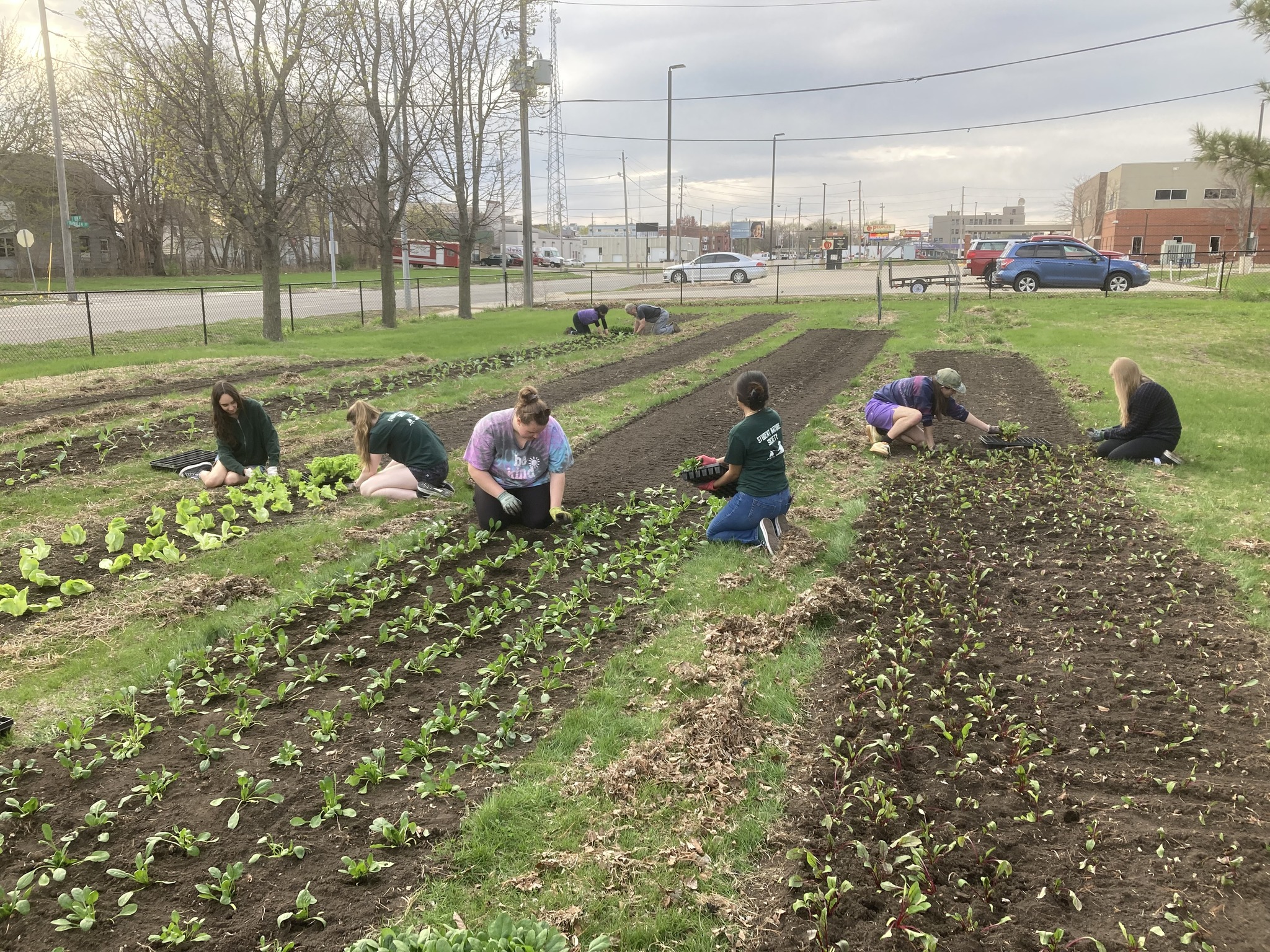
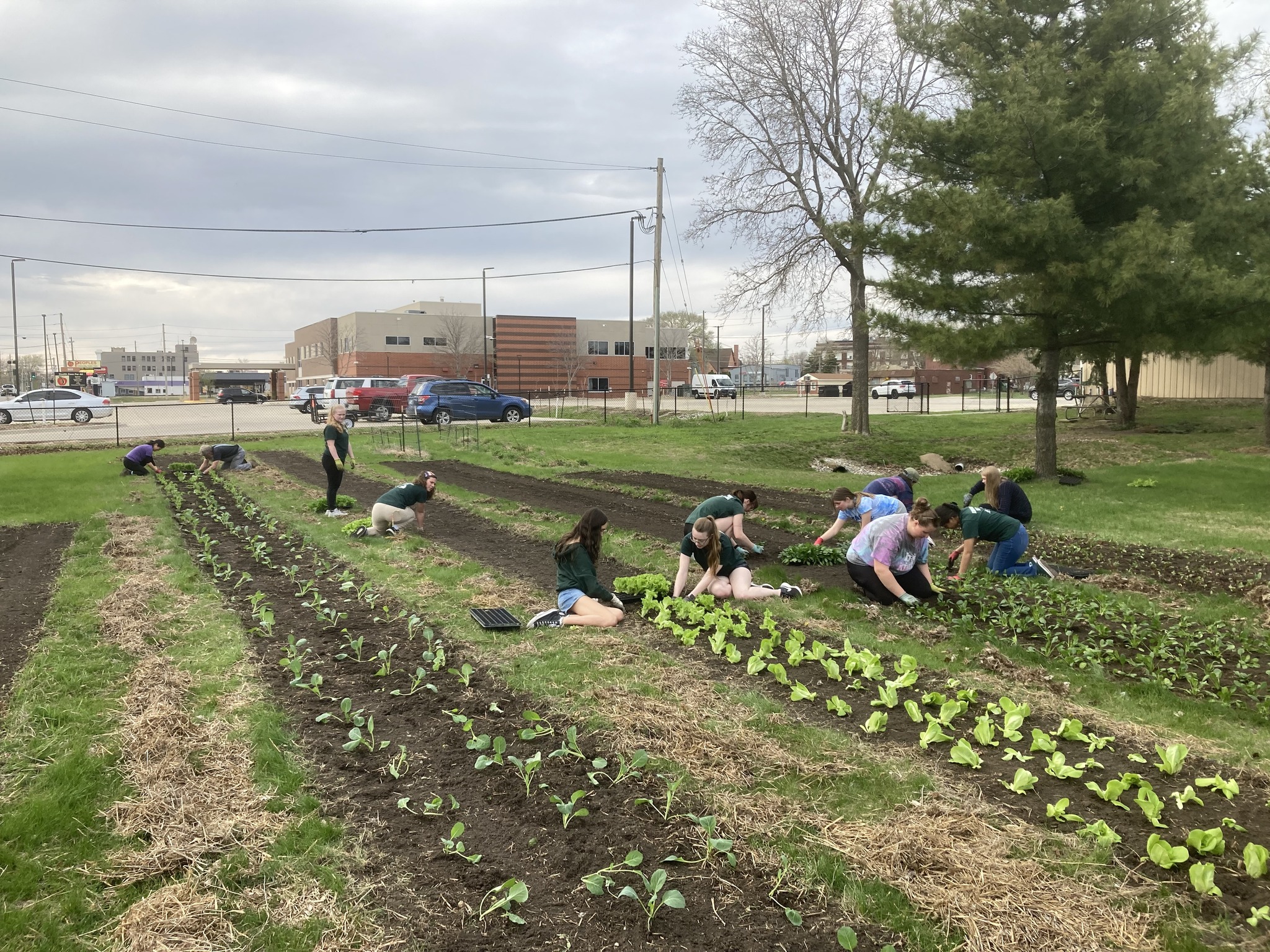
- Two projects were completed at the People’s Community Health Clinic in Waterloo:
- 1) students planted a pollinator garden that covers about 450 ft2 area outside the clinic to increase the pollinator habitat in the metropolitan center of Waterloo;
- 2) students also participated in the planting, growing, harvesting and distributing of fresh vegetables that provided food to patients of the clinic. The latter was directed by Dr. Kamyar Enshayan to help fight the food insecurity in Northeast Iowa.
- Interrelationships Between Geology, Ecosystems, and Human Health
- Dr. Chad Heinzel
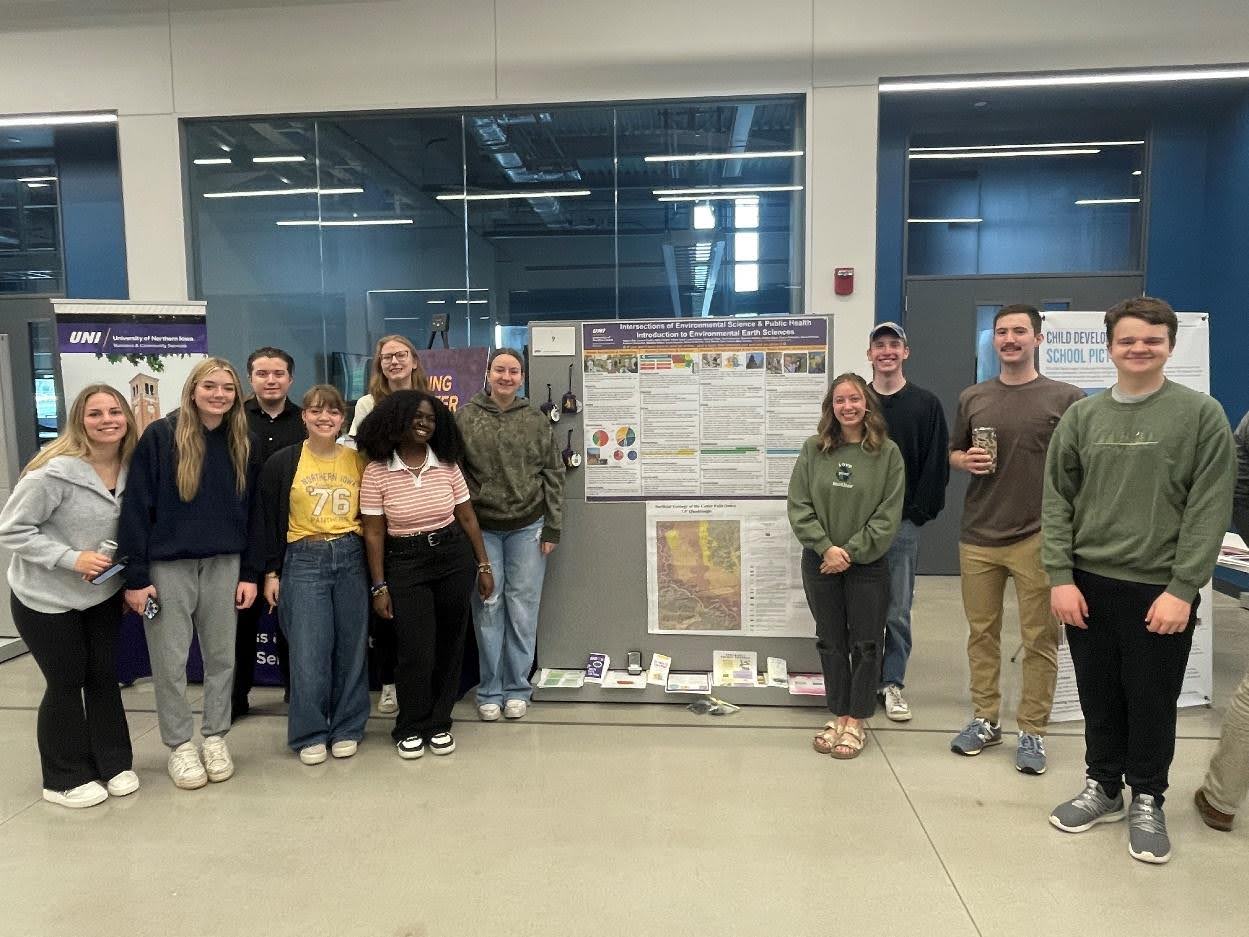
- Provided Introduction to Environmental Earth Science students an opportunity to learn about the interrelationships between geology, ecosystems, and human health.
- Activities included analyzing the chemistry of local rock, sediment, soil, and water as sources of radon, as well as performing indoor radon testing. Using the newly purchased radon detectors, project radon measurements ranged from 3.5 to 38.6 pCi/L. Some off-campus student rental properties ranged from 7.4 to 140.6 pCi/L, which equals smoking 67 cigarettes per 8 hours of sleeping or 15,008 per school year. The average radon level in an Iowa basement is 8.5 pCi/L more than double the EPA recommended ‘safe’ levels.
- Grant money helped develop a semester-long laboratory series to UNI’s undergraduate curriculum as a scientific reasoning category option, emphasizing links between Iowa’s environments and public health.
- Grant funds also contributed to consumable materials, e.g. gas and films for the students to run geochemical samples.
- Native Gardens Theatrical Production
- Kamryn Waymire
- Graduate Student & 2024-25 Green Iowa AmeriCorps Service Member
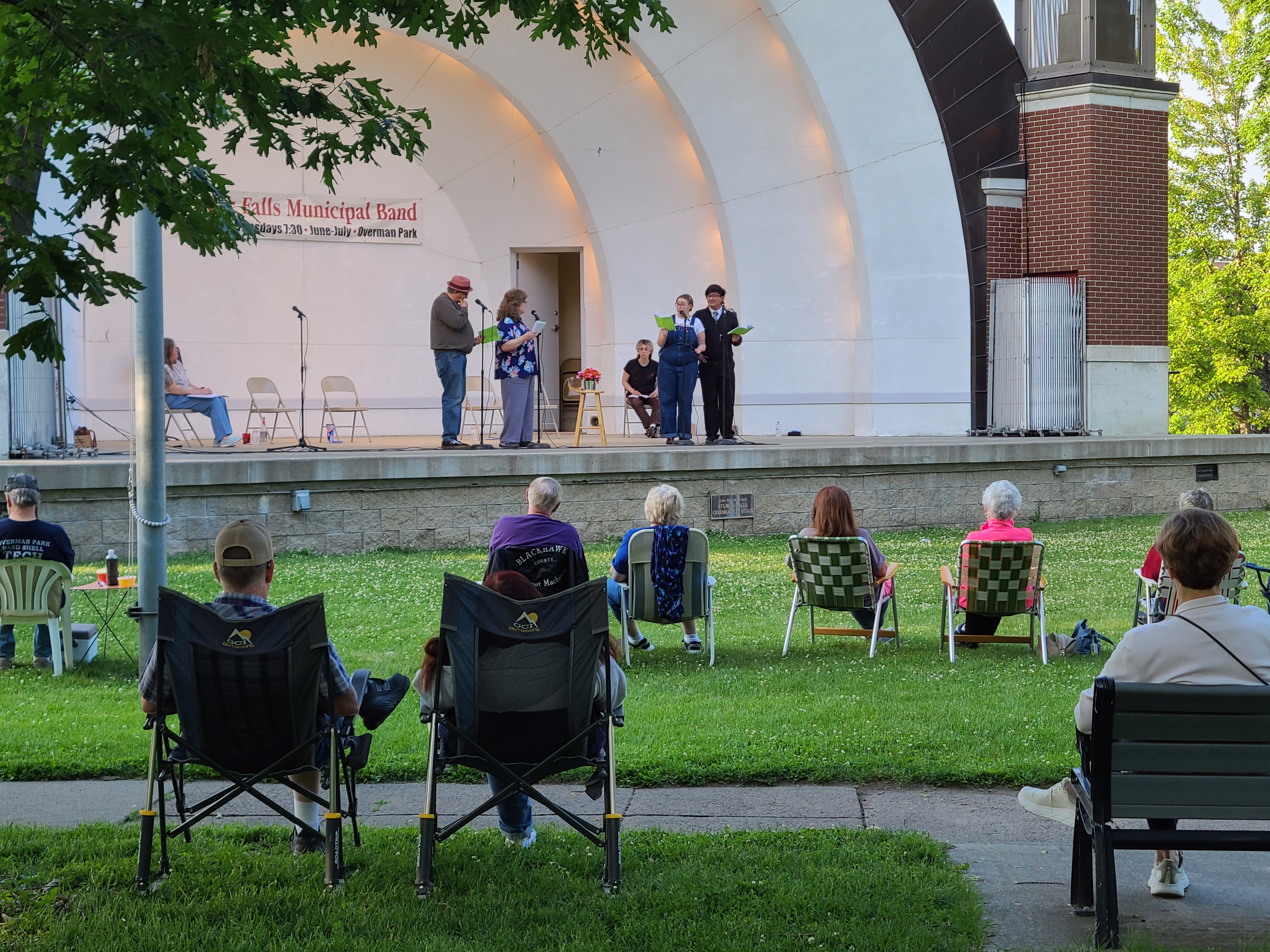
- An outdoor production of the play, “Native Gardens" by Karen Zacarias was staged at Overman Park in downtown Cedar Falls. The play centered around themes of environmentalism, being a "good neighbor," and the importance of native plant species.
- UNI faculty, students, and staff participated in roles including director and actors.
- Native plant seedlings and educational resources were available to those in attendance to learn about the harmful health impacts of pesticides and safe lawn management practices.
- This project demonstrated the power of creative, community-centered outreach to advance environmental education in a memorable and meaningful way.
- Tiger Salamanders in Wetlands
- Zane Poss
- Graduate Student; Dr. Peter Berendzen (faculty advisor)
- Studying tiger salamanders (a good indicator species of the health of the habitat) within Winnebago County, Iowa in restored wetlands.
- The successful restoration of wetlands have numerous impacts on human and environmental health including water purification, carbon sequestration, pest and flood control, and preservation of biodiversity.
- One round of sequencing has been completed for a total of 110 individuals. A second round of samples is currently being processed. So far, two primary genetic clusters have been identified, which is a good sign of a healthy habitat.
- Environmental Topics Reading & Writing for Primary Age Children
- Dr. Taraneh Matloob Haghanikar
- Taught Children’s Literature for Diversity and Social Justice as a summer course, which allowed pre-service and in-service educators to explore fictional children’s books to support their primary grade students' introduction to biodiversity and environmental diversity.
- This course section explored the negative impacts of human actions on coral reefs and how this circles back to human health. Students expressed their astonishment at the interconnectedness of ecosystems, particularly how the decline of coral reefs can negatively impact human health, regardless of geographic location.
- Additionally, the students learned that climate change exacerbates these issues. Within the course, students not only identified and analyzed books about coral reefs, but also wrote their own stories to show the connection between human and environmental health. They noted the lack of quality fictional books about coral reefs.
- Reflections and Journals from the class can be found on Padlet.
- Mosquito Fogging Practices Across Iowa & Raising Awareness About Pesticides
- Jordan Holloway
- Environmental Health Education and Outreach Intern Summer 2025
- IDALS and PAN pesticide databases were utilized to create and update fact sheets on organophosphate and PFAS-related pesticides. This was to increase awareness among Iowa farmers and stakeholders and support informed decision-making around pesticide use.
- Additionally, Jordan engaged with Iowa county and city government offices via phone and email to collect data on current mosquito control practices, identifying statewide patterns and providing insights to improve mosquito management strategies. She also completed the Eco-friendly Childcare course and developed ten updated resources for UNI’s Climate, Toxics, and Health Program, enhancing knowledge on child safety and environmental health.
- What Chemicals Are in the Air We Breathe Everyday?
- Dr. Alan Czarnetzki
- Air Quality Course Fall 2025
- Collaborating with Dr. Krystal Pollitt at Yale University, twenty-four Fresh Air wristbands were ordered for students to wear for seven days. The wristbands were then sent back to the lab at Yale for data analysis, which identified 289 compounds present in the air. For each of those compounds, the highest intensity detected per wristband is listed on a spreadsheet, as well as the compound’s predicted toxicity, function use, and chemical taxonomy.
- The dataset also shows a range from inconclusive to very high levels of the compound being carcinogenic, an endocrine disruptor, or impacting reproduction. Combined with student daily logs about their locations over the seven days of wearing the wristband and any products utilized such as cleansers, data can be analyzed to find patterns among the class.
- An Evening with Naomi Oreskes
- Dr. Robert Earle
- Environmental Ethics Course Spring 2026
- Dr. Naomi Oreskes gave a public lecture in Maucker Union on the UNI campus on "How Free Market Thinking Has Blocked Climate Action". She is the Henry Charles Lea Professor of the History of Science and Affiliated Professor of Earth and Planetary Sciences at Harvard University. Dr. Oreskes is an internationally renowned earth scientist, historian, and author of both scholarly and popular books and articles on the history of earth and environmental sciences. This event was part of the Aldo Leopold Distinguished Lecture Series at UNI.
- Panthers Against Plastic
Reusable, stainless steel travel tumblers were purchased in order to reduce single-use plastics on campus. Students receive a $0.25 discount when they bring the cup for any hot drinks at specified locations on the UNI campus.